
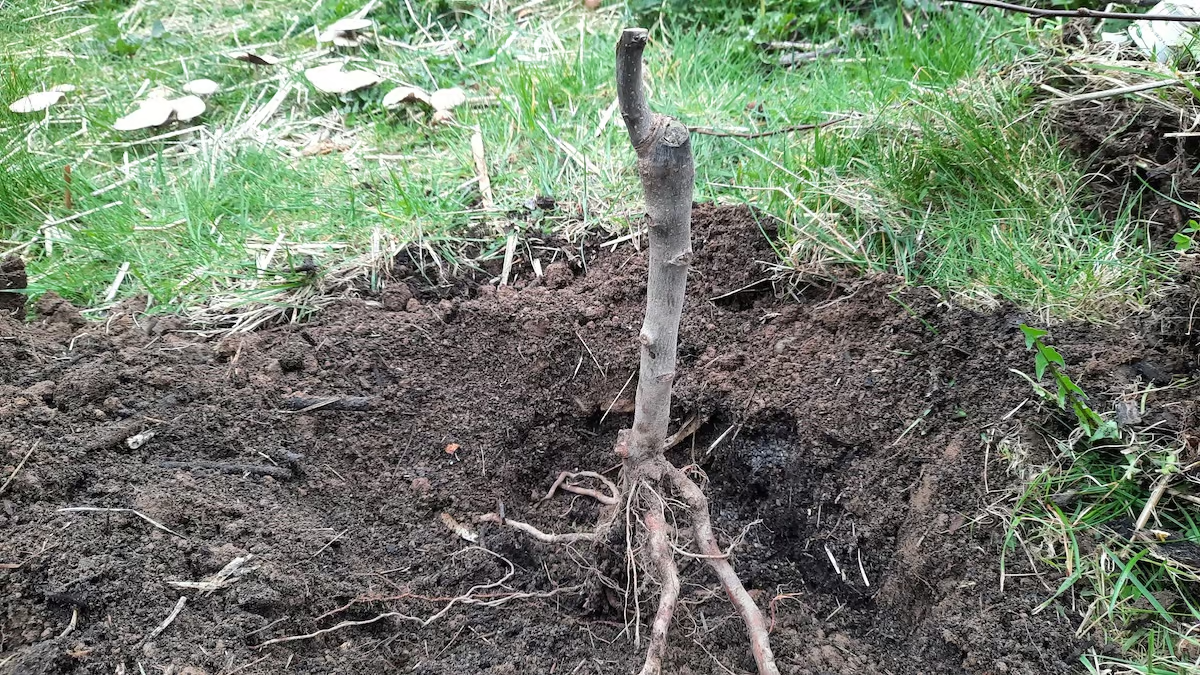
Whips, or one-year-old trees, are an affordable and adaptable choice for gardeners looking to establish new trees. These young trees are unbranched but come loaded with buds at their base, primed to grow into strong branches over time. Planting whips has several advantages over older, pre-shaped trees: they’re not only budget-friendly but also highly resilient once established.
To maximize their growth, I recommend cutting back whips to a low height after planting. This technique, known as “cutting back,” increases the root-to-top ratio, which enhances the tree’s chances of survival. With a robust root system, whips are better equipped to thrive in dry soil and survive without frequent watering. Reducing the top growth also prevents the young tree from being easily uprooted in storms, making it a practical choice for windy areas.
When planting, mulch generously around the base to suppress grass, which can compete with the whip for nutrients and water. November is ideal for planting whips, but with proper care, such as this cutting-back technique, they can be planted later in the season with minimal watering. Position the grafting point (often marked by a label) about 10 cm above ground, facing south to speed up the healing process.
By following these steps, your whip can grow into a strong, resilient tree with minimal maintenance.