
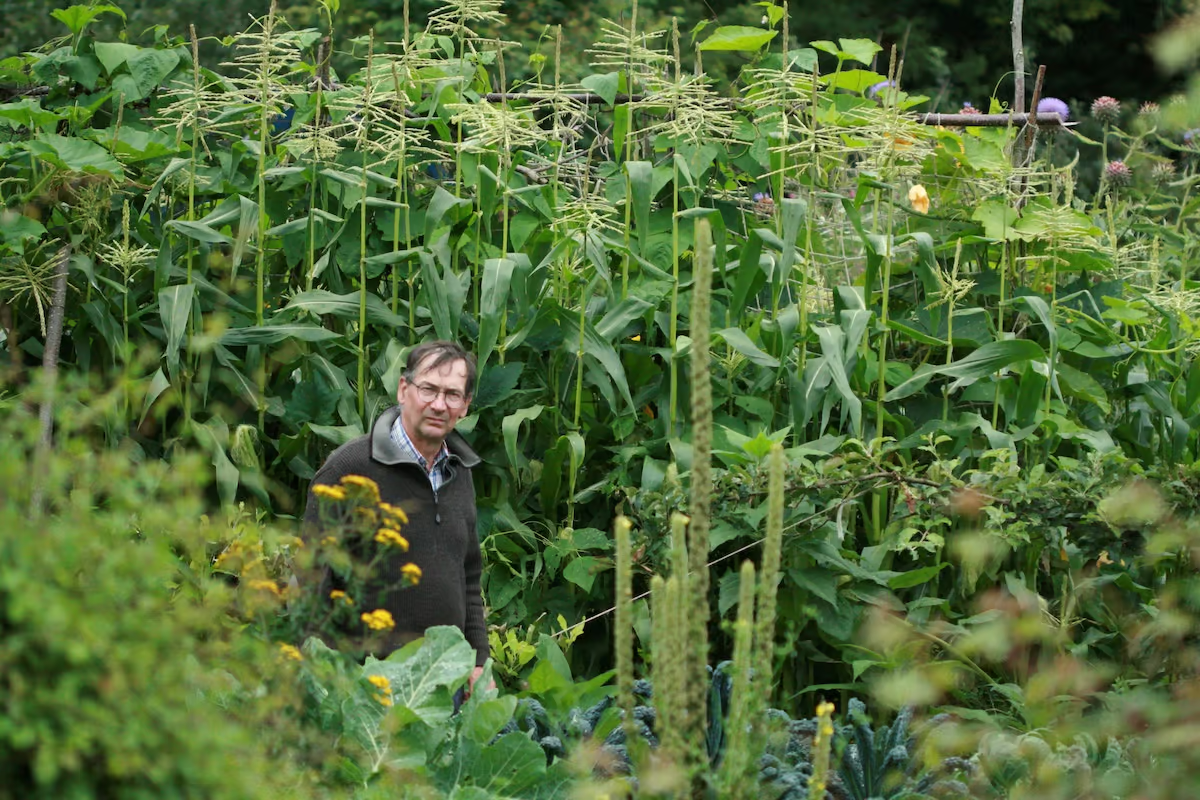
Cultivating a Resilient, Sustainable Future
As interest in sustainable gardening practices continues to rise, edible landscaping and syntropic gardening have emerged as powerful approaches that integrate food production with environmental stewardship. By blending permaculture principles with the ethos of syntropic farming, we can create lush, visually appealing landscapes that not only yield fresh food but also contribute to a regenerative ecosystem. Institutions like Dunmore Country School have championed these methods, teaching people to grow food in ways that mimic and support natural systems, conserve resources, and build resilience against climate change.
What is Syntropic Gardening?
The term “syntropy” stands in contrast to “entropy,” suggesting a system that builds complexity and abundance over time. Syntropic farming, rooted in Brazilian agroforestry practices, aims to create productive forests by planting trees in a high-density, multi-strata arrangement. Unlike traditional agriculture that relies on external inputs like fertilizers and pesticides, syntropic farming emphasizes process-based management, where the system generates its own fertility and resilience. This holistic approach results in a system that matures into a self-sustaining forest, while also providing food, timber, and other resources along the way.
Syntropic Gardening Goals and Principles
At the core of syntropic gardening is the ambition to reforest and regenerate land that has been degraded. By designing systems that yield short-, medium-, and long-term crops, syntropic agriculture provides incentives for both large and small landowners to embrace reforestation. This method creates sustainable, resilient food systems that help to reverse the impact of deforestation by creating productive, complex ecosystems.
Key Principles of Syntropic Gardening
- Keep the Soil Covered: Soil health is maintained by constantly covering it with pruned plant material. This cover protects the soil from erosion, retains moisture, and adds organic matter as it decomposes.
- Maximize Photosynthesis: Planting rows are arranged from north to south, allowing optimal sunlight exposure throughout the day. This increases photosynthetic activity, which helps produce a denser, more productive ecosystem.
- Stratification: In syntropic systems, plants are organized according to their light and space requirements, similar to the natural layering found in forests. By positioning plants based on their “strata”—emergent, high, medium, and low—the system maximizes sunlight and space while minimizing competition.
- Synchronization: Regular pruning and biomass management foster new growth and nutrient cycling, as plants release root hormones that stimulate regrowth. This constant cycle of growth, pruning, and regrowth keeps the system productive.
- Natural Succession: Plants are chosen to mimic the natural succession of a forest, moving from pioneer species to climax species over time. By replicating these stages, syntropic gardening promotes a balanced ecosystem that evolves toward stability.
- Management: Syntropic systems require intensive, active management, with a focus on pruning, mulching, and succession planning to maintain a productive and visually appealing environment.
Unique Features of Syntropic Gardening
Syntropic farming stands out from other agroforestry practices due to its emphasis on direct seeding, high-density planting, and replacing traditional weeding with regular pruning. In a typical 80-square-meter syntropic garden plot, over 1,100 plants can be grown, creating a dense forest-like environment that produces yields at all stages of succession.
Syntropic gardening also incorporates specific biomass management techniques. For instance, pruned material, including sunflower stalks or firewood-sized logs, is placed strategically (usually between the lazy beds) within the garden to enrich the soil. Unlike conventional gardening, where weeding is a central task, syntropic gardening relies on the dense planting and pruning of trees to suppress weeds naturally.
The Power of Edible Landscaping
Edible landscaping, or foodscaping, is another approach that combines aesthetics and functionality by growing food in ornamental landscapes. Edible landscapes blur the line between traditional flower gardens and vegetable patches, proving that food gardens can be visually stunning as well as productive. For example, classic English cottage gardens, with their lush variety of flowers, herbs, and vegetables, exemplify the potential of edible landscaping to create spaces that are both bountiful and beautiful.
Why Choose Edible Landscaping?
- Maximizing Space: For those with limited space, edible landscaping allows homeowners to grow food in small yards or even on balconies, integrating compact plants like dwarf fruit trees and leafy greens among decorative flowers and herbs.
- Promoting Biodiversity: By incorporating a variety of plants that flower at different times, edible landscapes attract pollinators and beneficial insects, creating a balanced ecosystem that supports natural pest control.
- Supporting Food Security: Growing food at home reduces reliance on store-bought produce, which is often transported long distances. This helps reduce the carbon footprint associated with food and increases household food resilience.
- Encouraging Organic Practices: Since these gardens produce food, there’s a natural shift away from pesticides, resulting in a healthier garden and safer food.
- Adding Beauty and Value: Edible landscapes enhance the visual appeal of a property, making the garden a feature to enjoy year-round. By integrating flowers, fruit trees, and colorful vegetable varieties, foodscapes can become living works of art.
Integrating Permaculture in Edible Landscaping and Syntropic Gardens
Permaculture, a design philosophy that emphasizes working with natural systems rather than against them, complements both syntropic gardening and edible landscaping. By focusing on principles like observation, energy conservation, and small-scale solutions, permaculture provides a framework for creating gardens that are sustainable and regenerative.
At Dunmore Country School, permaculture is a central theme in teaching edible landscaping and syntropic practices. The school encourages students to develop observation skills, understand seasonal cycles, and choose plants that will thrive in specific microclimates. By learning to work with their surroundings, gardeners can design resilient systems that require fewer external inputs and support a more diverse ecosystem.
Core Permaculture Principles Applied in Gardening
- Observe and Interact: Permaculture stresses the importance of understanding local climate, soil, and sunlight conditions before planting. This observation phase ensures that plants are placed in areas where they will thrive naturally.
- Catch and Store Energy: Practices like mulching, rainwater harvesting, and composting help capture and retain valuable resources within the garden, making it more resilient and productive.
- Use Small and Slow Solutions: By starting small, gardeners can test their designs and gradually expand. For example, annuals can be interplanted with slower-growing perennials to achieve immediate yields while waiting for larger plants to mature.
Creating Your Edible Landscape: Step-by-Step Guide
Step 1: Plan Your Layout
- Analyze Your Space: Observe the sun’s path, note shaded areas, and identify locations for high, medium, and low-light plants.
- Define Pathways: Establish pathways using mulch, gravel, or stepping stones to ensure easy access while delineating spaces for different plant groups.
- Consider Your Climate: Select plants that are well-suited to your regional climate. Drought-tolerant or frost-resistant varieties are particularly beneficial in extreme conditions.
Step 2: Choose Your Plants
- Diverse Foliage: Include vibrant, edible plants like rainbow chard and Redbor kale for color and texture.
- Perennial Herbs: Plants like rosemary, sage, and thyme are attractive, aromatic, and attract pollinators.
- Fruit and Nut Trees: Opt for dwarf or semi-dwarf varieties of apple, pear, or hazelnut trees to maximize productivity in small spaces.
- Edible Flowers and Native Plants: Add pansies, nasturtiums, and calendulas for culinary use and pollinator support.
Step 3: Apply Syntropic Techniques
- Succession Planting: Plant fast-growing vegetables like lettuce alongside slower-growing crops, ensuring a continual supply of fresh food.
- Layered Planting: Mimic natural forests by planting ground cover crops below shrubs and shrubs below trees, creating a system that maximizes light use and supports a thriving mini-ecosystem.
Step 4: Maintain and Support the System
- Mulching and Composting: Regular mulching enriches soil health, while composting adds essential nutrients.
- Pruning and Regrowth: Regular pruning encourages growth and maintains order in the garden while reducing weeds.
- Observe Seasonal Changes: As your landscape matures, observe how plants respond to the seasons, expanding with varieties that thrive in your garden’s microclimate.
Dunmore Country School: A Living Example of Sustainable Gardening
Dunmore Country School’s commitment to permaculture and syntropic gardening has inspired many to rethink their approach to growing food. Through workshops, classes, and community projects, Dunmore teaches methods that help gardeners turn their landscapes into regenerative systems. From high-density planting to creative uses of biomass, Dunmore provides hands-on learning that empowers individuals to create foodscapes that are resilient, abundant, and in harmony with nature.
Conclusion: Transforming Gardens into Regenerative Landscapes
Edible landscaping and syntropic gardening represent a shift towards regenerative gardening, where beauty and function come together to support food production, biodiversity, and environmental health. Whether you’re a beginner or a seasoned gardener, these practices offer a pathway to create resilient, self-sustaining gardens that contribute positively to the ecosystem. As we learn to grow with the land rather than on it, we embrace a new gardening philosophy—one that values patience, harmony, and natural abundance.