
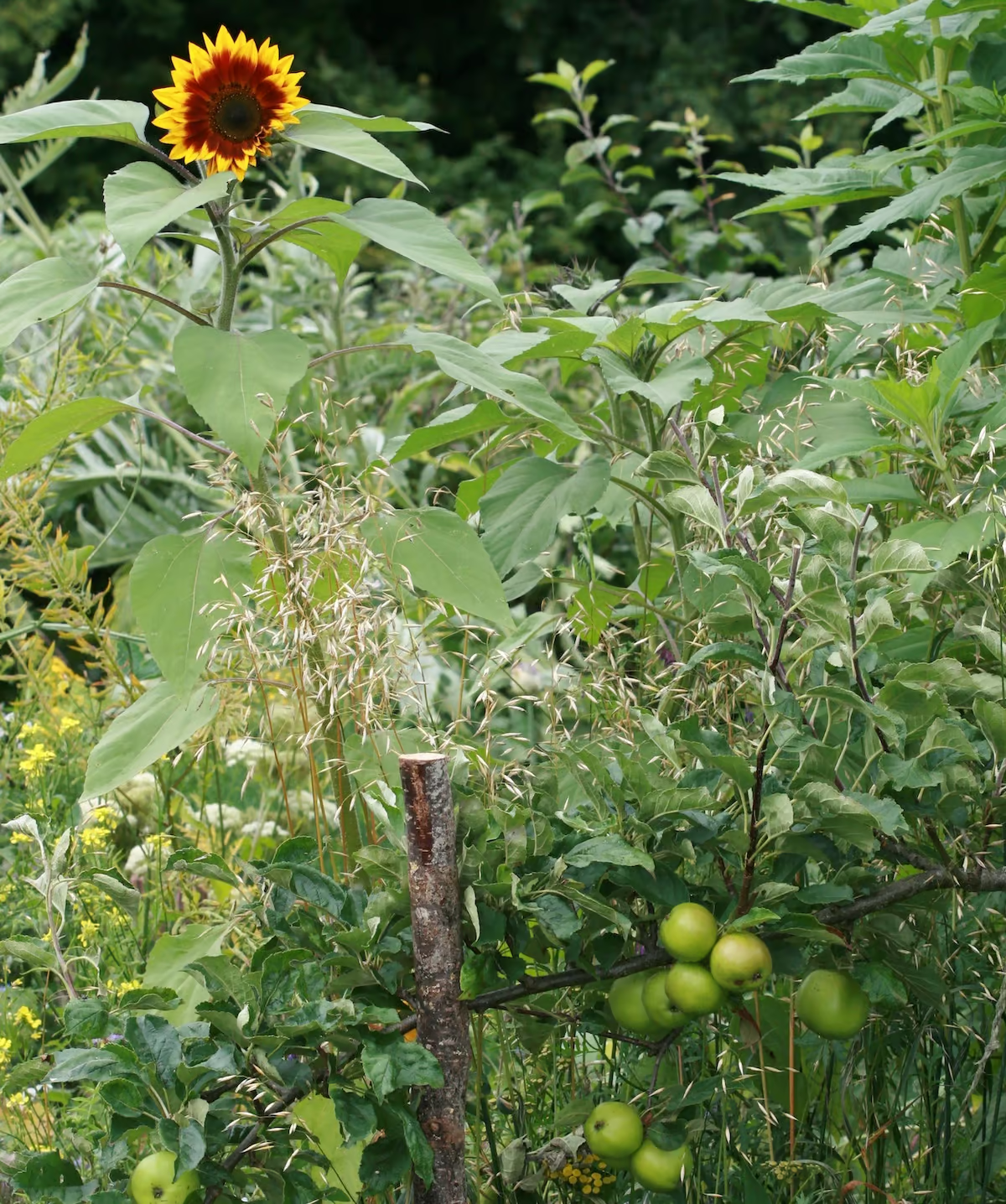
Growing Abundance in Harmony with Nature
Syntropic gardening, a pioneering approach to sustainable agriculture, offers a unique pathway to growing abundant food and forests by harmonizing with nature’s processes. Rooted in the principles of regeneration and inspired by Brazil’s need to combat deforestation, syntropic gardening is an intensive form of agroforestry that reimagines traditional farming. Unlike conventional agriculture that depletes resources, syntropic gardening focuses on nurturing ecosystems that grow in complexity and productivity over time. This innovative approach has inspired gardening enthusiasts worldwide, including leaders at Dunmore Country School, who emphasize teaching syntropic principles to cultivate resilient, regenerative gardens that yield food and environmental benefits alike. Ernst Götsch is the father of syntropic farming. His extraordinary work in Brasil is well documented.
What is Syntropic Gardening?
Syntropic gardening revolves around the idea of syntropy—the opposite of entropy, where systems accumulate energy and complexity rather than depleting it. This philosophy views ecosystems as dynamic, self-sustaining systems that increase in vitality and abundance over time. Unlike input-dependent industrial agriculture, syntropic gardening relies on natural processes like succession, stratification, and synchronization, creating systems that manage their own fertility and produce yields across short, medium, and long timelines.
In essence, syntropic gardening is a forest-mimicking system that builds diverse layers of plant life, just as a natural forest would. It requires careful planning, high-density planting, and intensive biomass management to imitate the forest’s resilience and productivity. The ultimate goal? To create productive, self-sustaining forests that not only yield food but also help reforest our planet, combat climate change, and restore biodiversity.
Core Principles of Syntropic Gardening
At the heart of syntropic gardening are six core principles: soil cover, maximizing photosynthesis, stratification, synchronization, natural succession, and management. Here’s a closer look at each principle and how they guide this process-based form of agriculture.
1. Keep the Soil Covered
A fundamental principle in syntropic gardening, soil cover is maintained by growing dense biomass on-site and regularly pruning or cutting it to mulch the soil. This protects against erosion, retains moisture, and adds organic matter back to the earth, enhancing soil fertility. Unlike traditional agriculture that relies on synthetic fertilizers, syntropic gardening builds fertility from within, using plants and organic waste to regenerate the soil.
2. Maximize Photosynthesis
To maximize photosynthesis, syntropic gardeners arrange rows of trees from north to south, ensuring optimal sunlight exposure throughout the day. This orientation, combined with high-density planting (20 to 40 plants per square meter), allows for maximum energy capture. By optimizing photosynthesis, syntropic gardens support faster growth, healthier plants, and more efficient energy use within the ecosystem.
3. Stratification
Stratification in syntropic gardening involves layering plants in vertical space according to their light needs, growth habits, and structural characteristics. Syntropic gardeners typically classify plants into four strata—emergent, high, medium, and low—to create a multi-layered, forest-like structure. This layered planting maximizes space efficiency and light usage while mimicking the biodiversity and structure of a natural forest.
4. Synchronization
Synchronization refers to carefully timed pruning and harvesting to encourage new growth, create space for succession plants, and stimulate root activity. Pruning releases growth hormones in the roots, prompting regeneration and resilience in the plant community. Unlike conventional weeding, syntropic gardeners use pruning as a tool to manage plant growth, control competition, and encourage the system’s natural progression.
5. Natural Succession
Syntropic systems evolve through stages of succession, from the placenta stage to the climax stage, much like a natural forest. By designing gardens that pass through these stages, syntropic gardeners ensure that the system will continue to mature and thrive over time, ultimately resembling a native forest. Each stage provides a unique set of yields, from fast-growing annuals in the placenta stage to long-term timber and fruit in the climax stage.
6. Intensive Management
Though syntropic gardens are self-sustaining, they require intensive management to guide the natural succession and maintain biodiversity. From sourcing and planting diverse species to managing complex spatial and temporal patterns, syntropic gardeners invest knowledge, labor, and skill to create harmonious ecosystems that yield food, timber, and other resources.
Unique Characteristics of Syntropic Gardening
Syntropic gardening distinguishes itself from other forms of agroforestry through several defining practices. From direct seeding to high-density planting, syntropic gardening requires specialized techniques and a significant investment of time, labor, and logistical planning.
1. North-to-South Rows
Syntropic gardens are typically planted in north-to-south rows to maximize sunlight exposure. This layout helps capture more sunlight throughout the day and minimizes the shadowing effect, ensuring that all plants receive adequate light.
2. Direct Seeding
In syntropic gardening, direct seeding is preferred over transplanting, especially for trees. This practice reduces costs and allows gardeners to plant a large variety of species directly into the soil, fostering resilience and minimizing transplant shock.
3. High-Density Planting
Syntropic systems demand extremely high-density planting, often up to 40 plants per square meter. This density creates a rich, diverse ecosystem that supports multiple layers of vegetation and provides yields across short, medium, and long timeframes.
4. Biomass Management
Managing biomass is crucial in syntropic gardening. Rather than weeding, gardeners regularly prune plants to manage growth, enhance soil cover, and stimulate new growth. Biomass from pruned material is used as mulch to nourish the soil, retain moisture, and support biodiversity.
5. Synchronized Planting
In a syntropic system, it’s ideal to plant all species at the same time to initiate the system’s natural succession. This method demands precise planning and a robust understanding of plant relationships and timing, as each species plays a role in the ecosystem’s development.
6. Heavy Logistical Needs
Implementing a syntropic system involves heavy logistical operations, from sourcing seeds and plants to storing and planting them in vast quantities. This scale of planting requires substantial planning and organization, especially for larger plots.
Benefits of Syntropic Gardening
Syntropic gardening not only provides a wide range of yields but also contributes significantly to environmental restoration, carbon sequestration, and soil health. Here’s why more gardeners and farmers are embracing this approach.
1. Promotes Biodiversity
Syntropic gardening’s dense, diverse planting style creates habitats for various plant and animal species, enhancing biodiversity and creating a balanced, resilient ecosystem.
2. Sequesters Carbon
By encouraging tree growth and continuous soil cover, syntropic gardens sequester atmospheric carbon, helping combat climate change. As trees mature, they store more carbon, making syntropic gardening a powerful tool for environmental sustainability.
3. Restores Soil Health
Regular pruning and mulching nourish the soil, fostering a healthy microbiome that supports plant growth. By maintaining a constant supply of organic matter, syntropic gardens regenerate soil fertility naturally, eliminating the need for chemical fertilizers.
4. Provides Diverse Yields
Syntropic systems offer yields at every stage of growth, from short-term crops like radishes to long-term yields like timber. This system allows farmers and gardeners to harvest continuously while their forest matures, supporting both food security and income generation.
5. Resilient, Low-Maintenance Systems
Though intensive at first, syntropic gardens become more resilient and self-sustaining over time. Once established, these systems require less maintenance, as the diverse plant life supports natural pest control, soil regeneration, and water conservation.
Syntropic Gardening at Dunmore Country School
At Dunmore Country School, syntropic gardening principles are integrated into a comprehensive learning approach that empowers gardeners and farmers to work harmoniously with natural processes. The school emphasizes a regenerative, hands-on approach to farming, encouraging students to observe and interact with their environment as they learn to implement syntropic techniques. By teaching students how to create resilient ecosystems, Dunmore Country School contributes to a new generation of sustainable growers.
Practical Tips for Syntropic Gardening
Interested in starting your own syntropic garden? Here are some tips to get started:
1. Start Small
Begin with a small plot to understand the principles of succession and stratification before expanding. Observe how plants interact and adapt to the soil, sunlight, and other environmental factors.
2. Choose Diverse Species
Select a variety of plants across different strata (emergent, high, medium, low) to ensure a layered, forest-like structure. Consider plants that offer both short-term and long-term yields to keep the garden productive. Good plants to consider in a kitchen garden in Ireland are the sunflower family (sunflower like ‘Mongolian Giant’, jerusalem artichoke, silphium perfoliatum), lemon balm, cardoon, sweet cicely, leonorus cardiaca, symphytum*uplandicum ‘Bocking 14’, angelica, echinops ritro.
3. Prioritize Soil Cover and Mulching
Keep the soil covered at all times to prevent erosion and retain moisture. Use pruned biomass to mulch the soil, which will enrich the soil with nutrients and organic matter. It is a good way to rediscover very old techniques like pollarding and coppiccing.
4. Embrace Direct Seeding
Where possible, direct-seed to reduce transplant shock and establish strong root systems. This is especially effective for trees and larger plants that will form the backbone of your system.
5. Prune Regularly
Pruning encourages new growth and controls competition. Use the pruned biomass as mulch to keep the system self-sustaining.
Final Thoughts: Building a Regenerative Future
Syntropic gardening is more than a method; it’s a philosophy that promotes regeneration, resilience, and abundance. By working with natural processes, syntropic gardeners can create productive landscapes that contribute to environmental restoration and food security. For gardeners and farmers alike, syntropic gardening offers a powerful tool for growing food while fostering a thriving ecosystem.
As we face global environmental challenges, syntropic gardening stands out as a beacon of hope, a way to heal the land while enjoying fresh vibrant food.